Simplifying Complexity in Built Environments
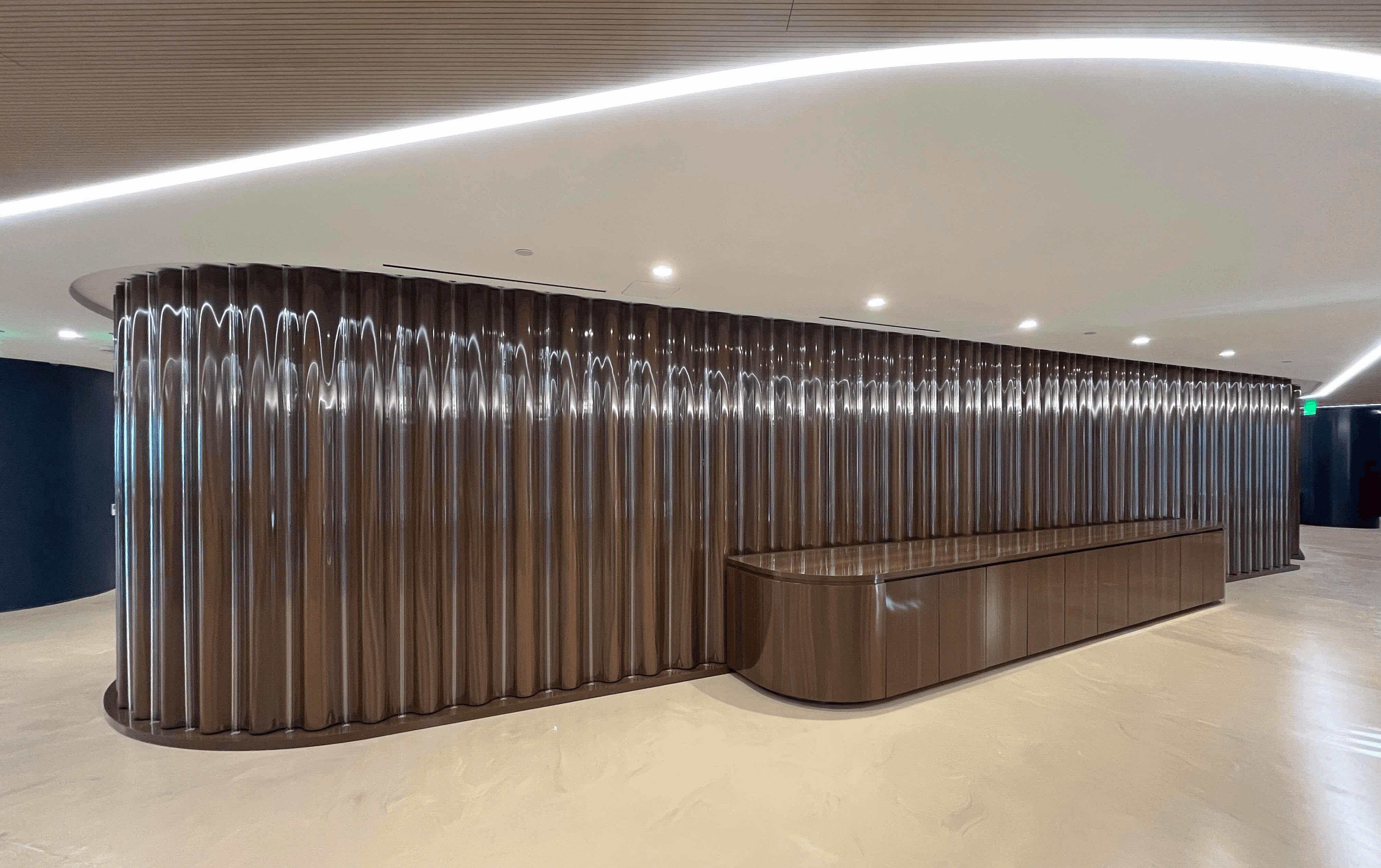
Led the design of a manufacturable Corian wall system for Gensler’s Washington, DC office project for the American Chemistry Council, translating architectural intent into a scalable production solution.
00
problem
The original design called for several unique Corian panels applied across two distinct wall conditions: - A flat wall section - A curved wall section While the panels appeared identical, each condition required different hardware and mounting logic. If approached literally, this would require: - Multiple mold sets - Separate production workflows - Increased cost and fabrication time - Greater risk of installation error The challenge was to preserve visual consistency while simplifying the system behind it.
solution
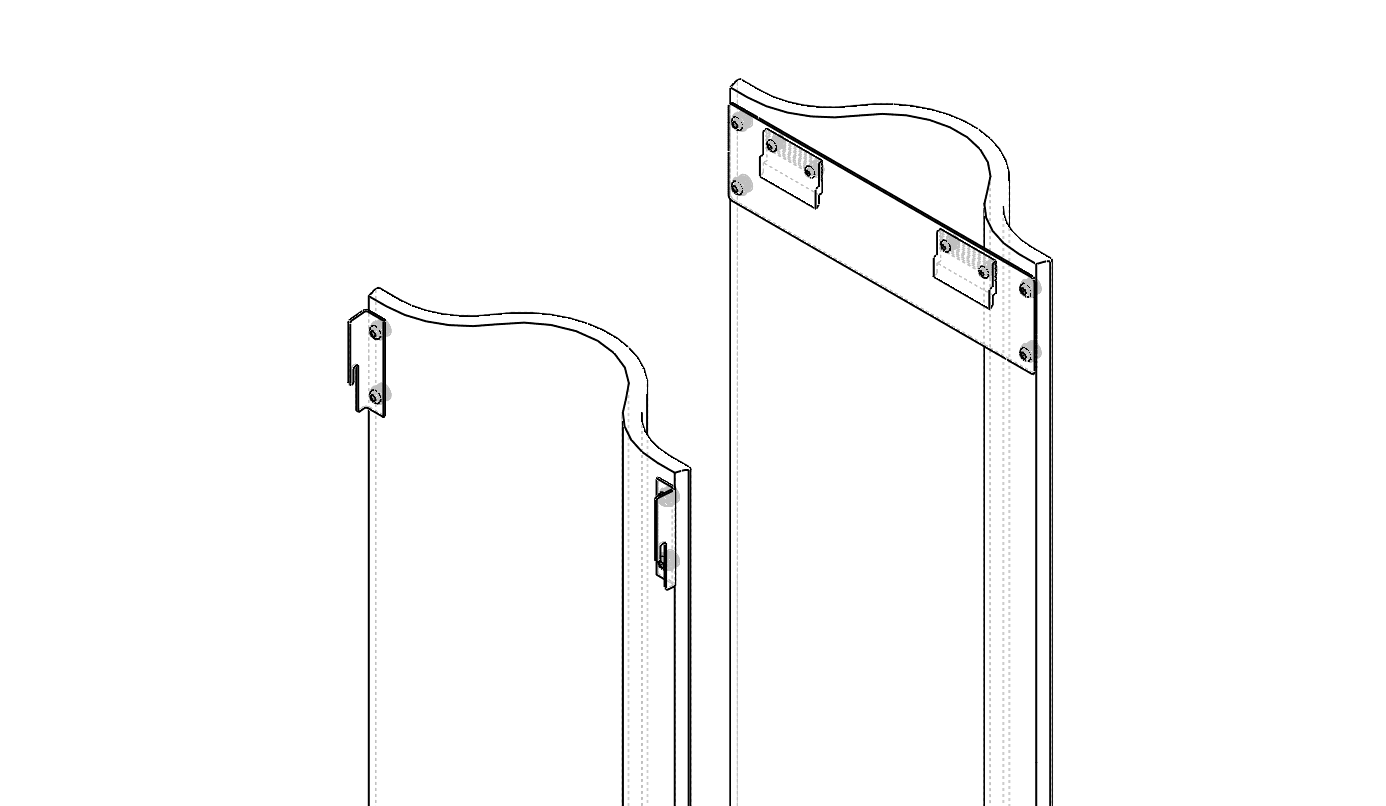
Rather than creating separate molded systems, I designed a universal hardware mounting strategy that allowed the same Corian panel mold to adapt to both wall conditions. - The visible surface remained consistent. - The intelligence moved to the mounting system. This approach: - Eliminated the need for multiple molds - Reduced production complexity - Increased installation clarity - Lowered the risk of on-site misalignment By shifting variability into the hardware rather than the molded form, we preserved the architectural vision while creating a scalable fabrication method.
Two identical molded Corian panels with hardware for two different wall conditions.
Process
Site Verification & Data Capture
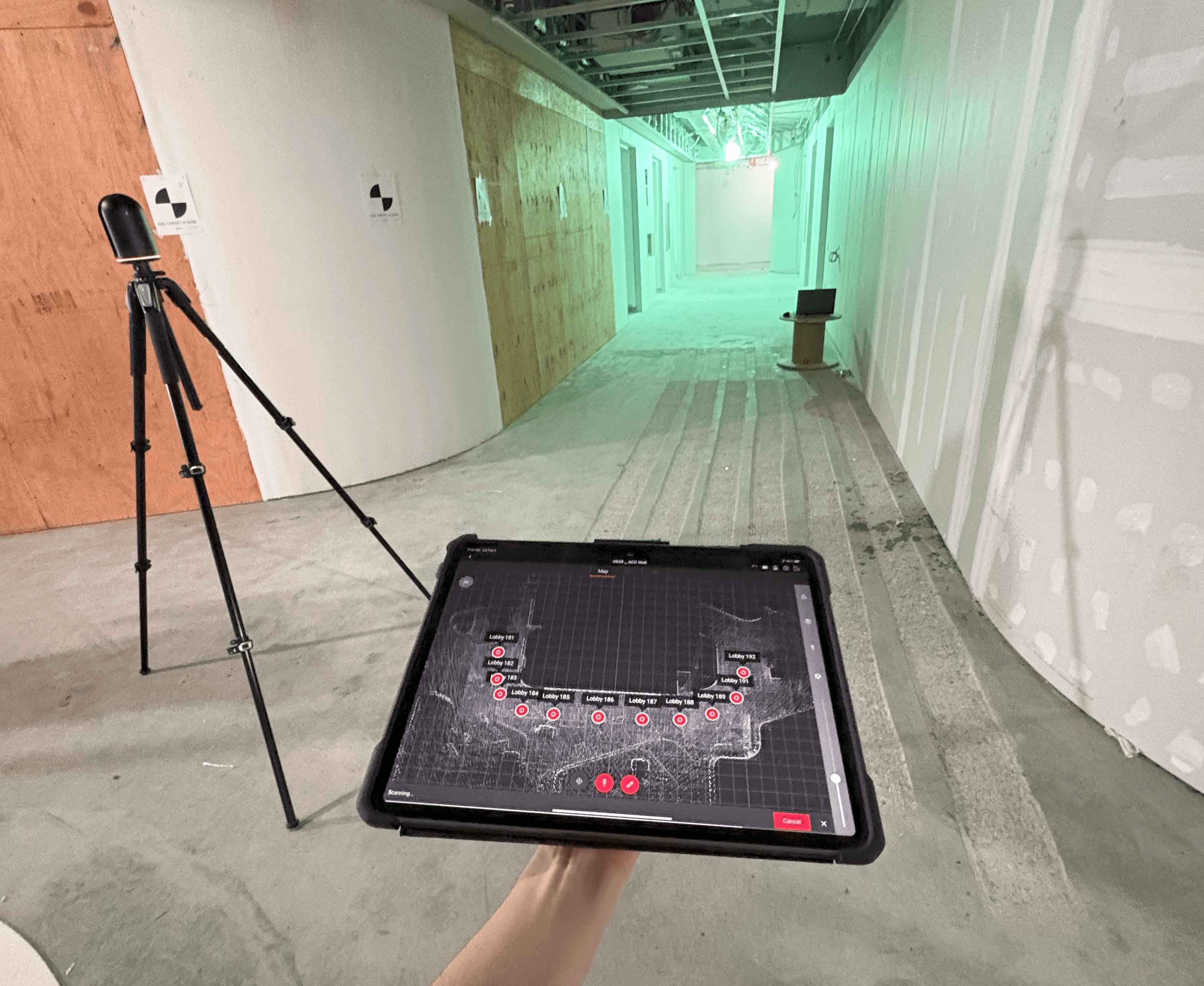
I traveled to Washington, DC with the CCO and Project Manager to meet the construction team and perform a 3D scan of the as-built wall conditions. This scan informed the final CAD production model and reduced tolerance risk.
Design for Fabrication
I developed detailed CAD models and production drawings defining:
Mold geometry
Heating and forming specifications for Corian
Hardware placement tolerances
Structural attachment points
Corian sheets were heated and vacuum-formed over CNC-milled molds to achieve a uniform curve without air gaps or surface inconsistencies.
Contract Documentation
The fabrication drawings, once approved and signed, became the contractual basis for production.
These documents defined scope, tolerances, material finishes, and installation intent.
Installation Systems
Because installation was executed by third-party contractors, I developed highly detailed step-by-step installation documentation to ensure consistency across teams.
year
2025
timeframe
1+ Year
tools
Solidworks, Adobe, Rhino3D
category
Industrial Design