Service Strategy for Automotive Customer Experience
Designed a dashboard that helps everyday drivers track maintenance, invoices, and upcoming service. Reducing mistrust at the point of sale while supporting healthier vehicles and more informed service decisions.
00
problem
Pop-in auto shops have a negative reputation for misrepresenting vehicle needs, causing customers to resist even essential maintenance.
solution
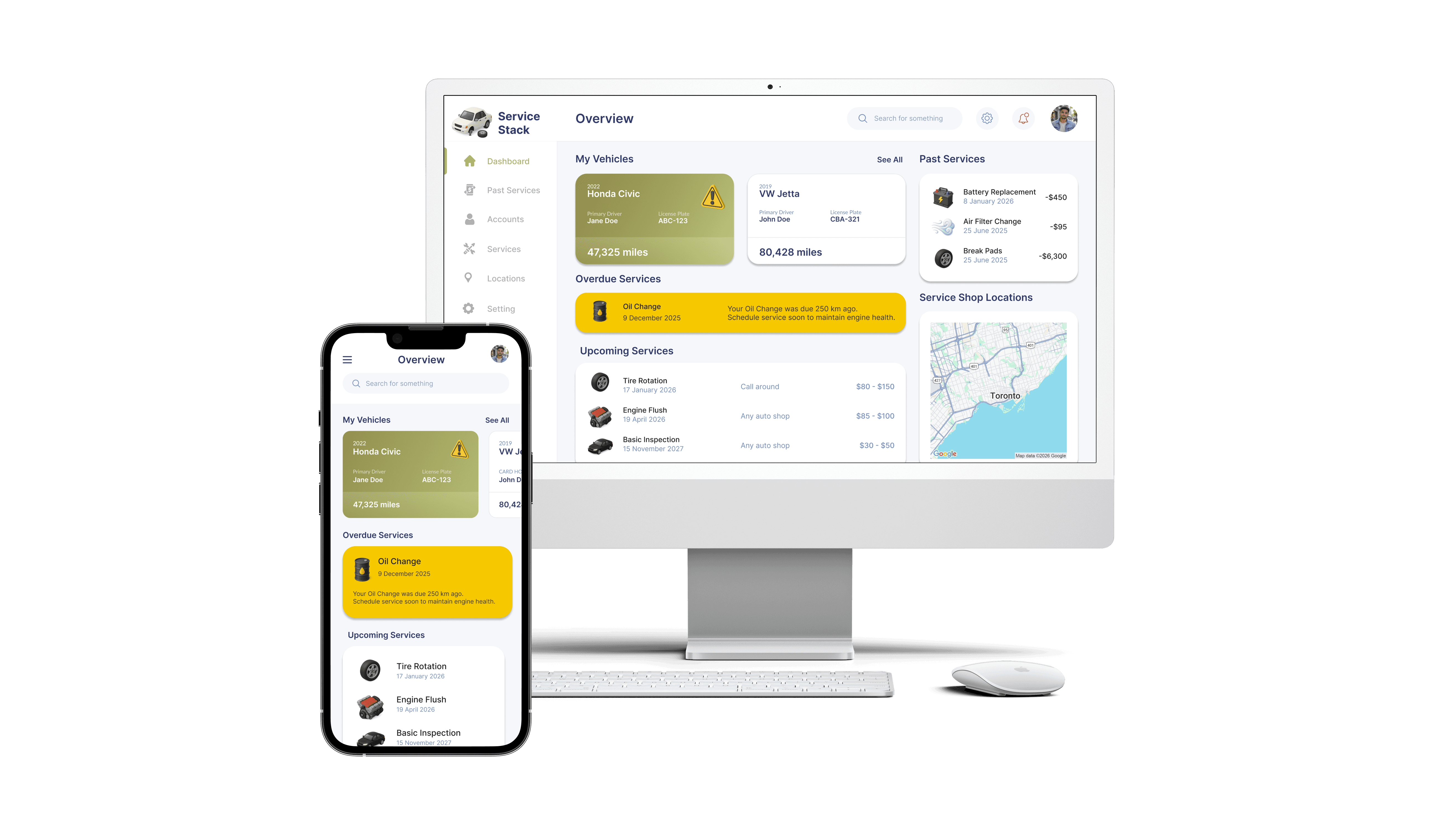
I created Service Stack, a user dashboard designed for everyday drivers. It centralizes your vehicle’s service history, reminders, and receipts, making maintenance easy to manage.
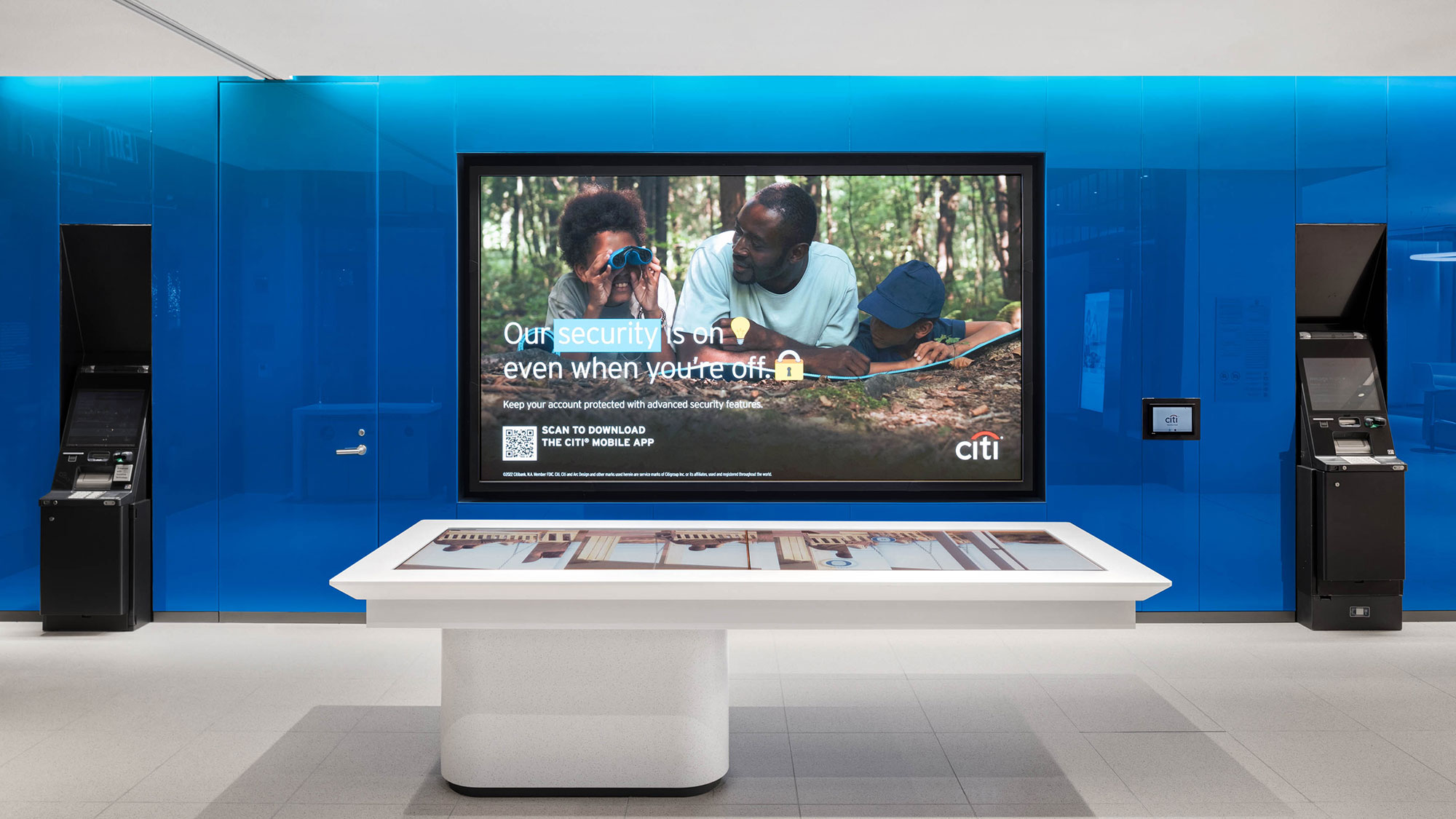
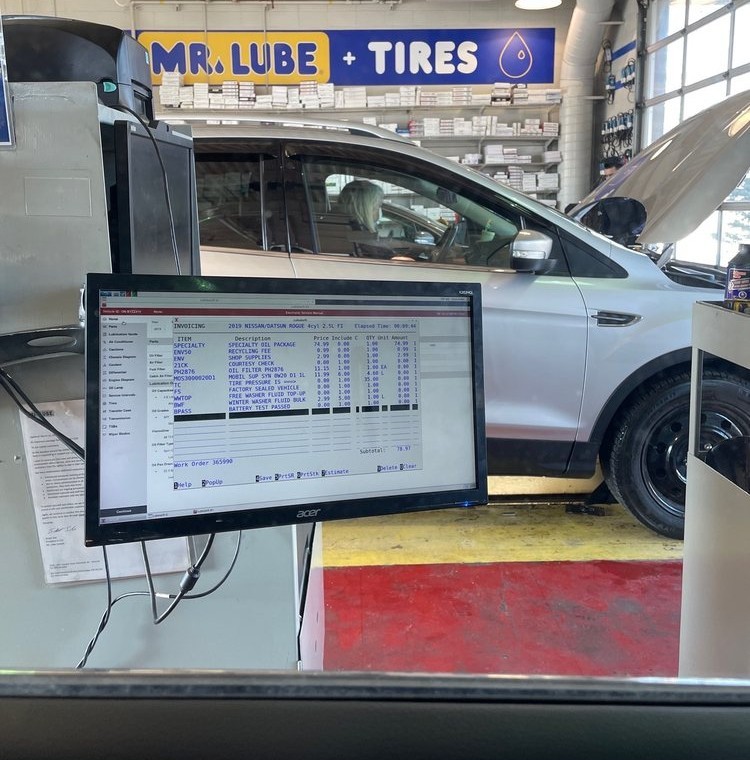
An ambiguous interface is presented at time of service.
People wanting a simple oil change are forced to decipher this list of services the technician is proposing. It contains; the proposed maintenance, services that are free, and results of tests done on the car, with no visual distinction between each.
Audience
The majority of Canadians own their own vehicles, with Statistics Canada reporting that 26.3 million road motor vehicles were registered nationwide in 2022. To support this large population of drivers, no-appointment auto repair shops are widespread across both Canada and the United States, offering convenient, on-demand maintenance. Brands such as Jiffy Lube, Car Hub, Mr. Lube, Midas, and many others cater to vehicle owners who need quick, walk-in services without the friction of scheduling appointments.
Quick Research
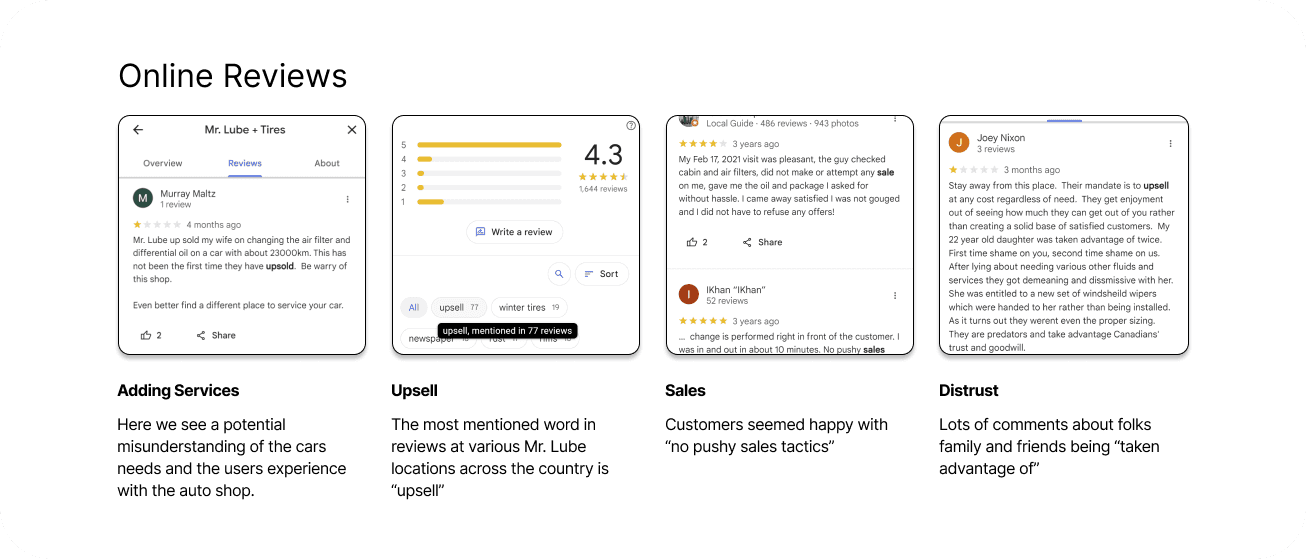
To accommodate the project’s tight timeline and to confirm my suspicions that there was room for improvement, I conducted qualitative user research by reviewing online customer feedback for auto repair shops across the country. Across these reviews, the most frequently mentioned theme was “upsell,” often framed negatively. While some customers explicitly praised locations for having “no pushy sales tactics,” many others expressed distrust, sharing stories of friends or family members feeling taken advantage of.
Slow Research
I interviewed 12 strangers outside of Mr. Lube, resulting in a deeper understanding of the pain points. The majority of customers expressed frustration with being sold services they did not originally come in for, often perceiving these interactions as unnecessary or mistrustful. At the same time, most customers did not identify as automotive experts, yet believed they understood their own vehicles better than the technicians recommending additional work. This tension reveals a critical gap in trust and communication, suggesting an opportunity to better align technical expertise with customers’ sense of ownership and understanding of their cars.
Key Insights
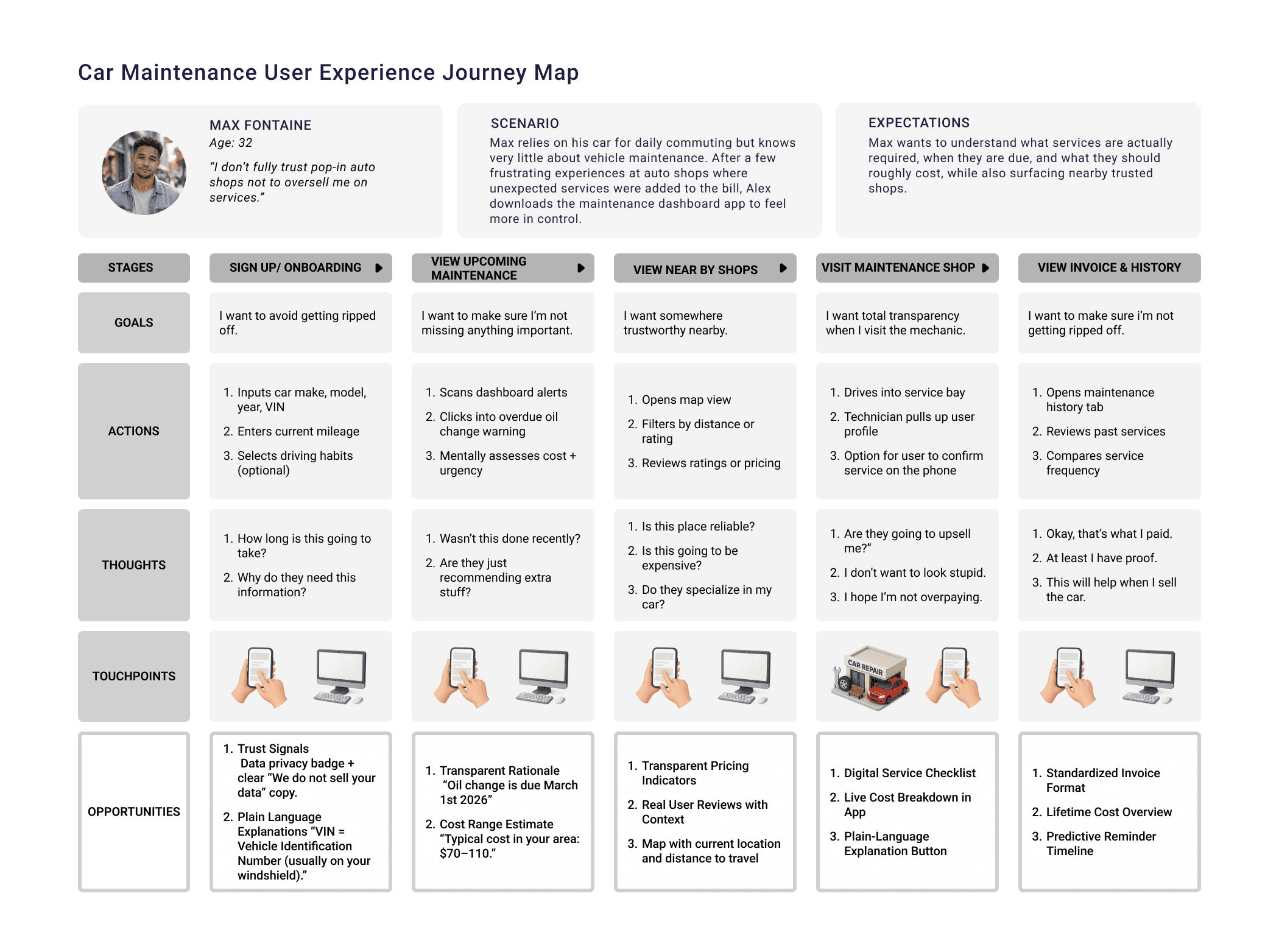
Trust breaks down at the moment of service, not before or after
Customers often interpret additional recommendations as sales tactics rather than care
Mixed information (diagnostics, free checks, proposed services) increases cognitive load
Paper receipts prevent long-term visibility into vehicle health and spending
Customers want control and understanding, not avoidance of maintenance
Designing Continuity Between Digital and Physical Touchpoints
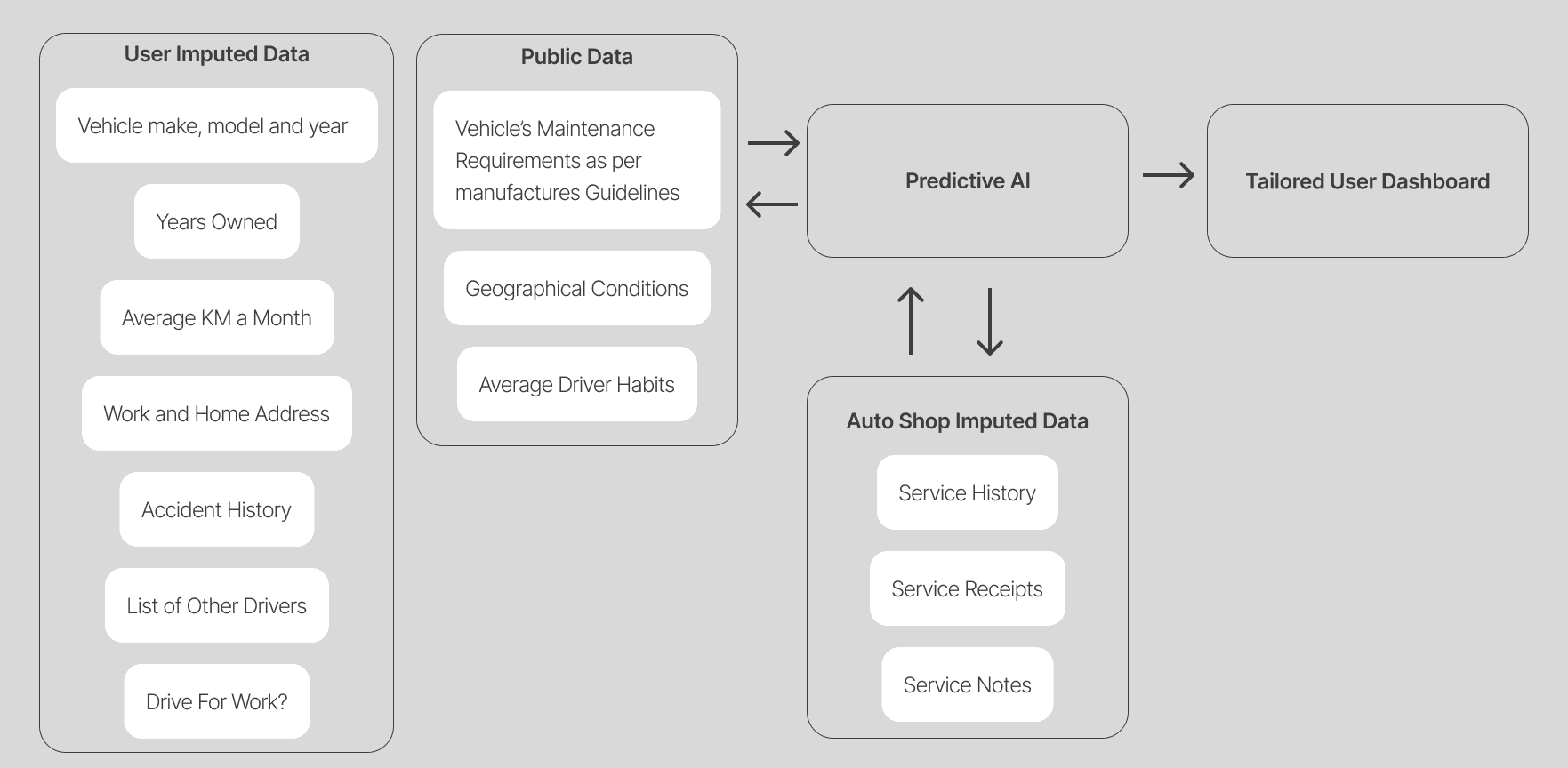
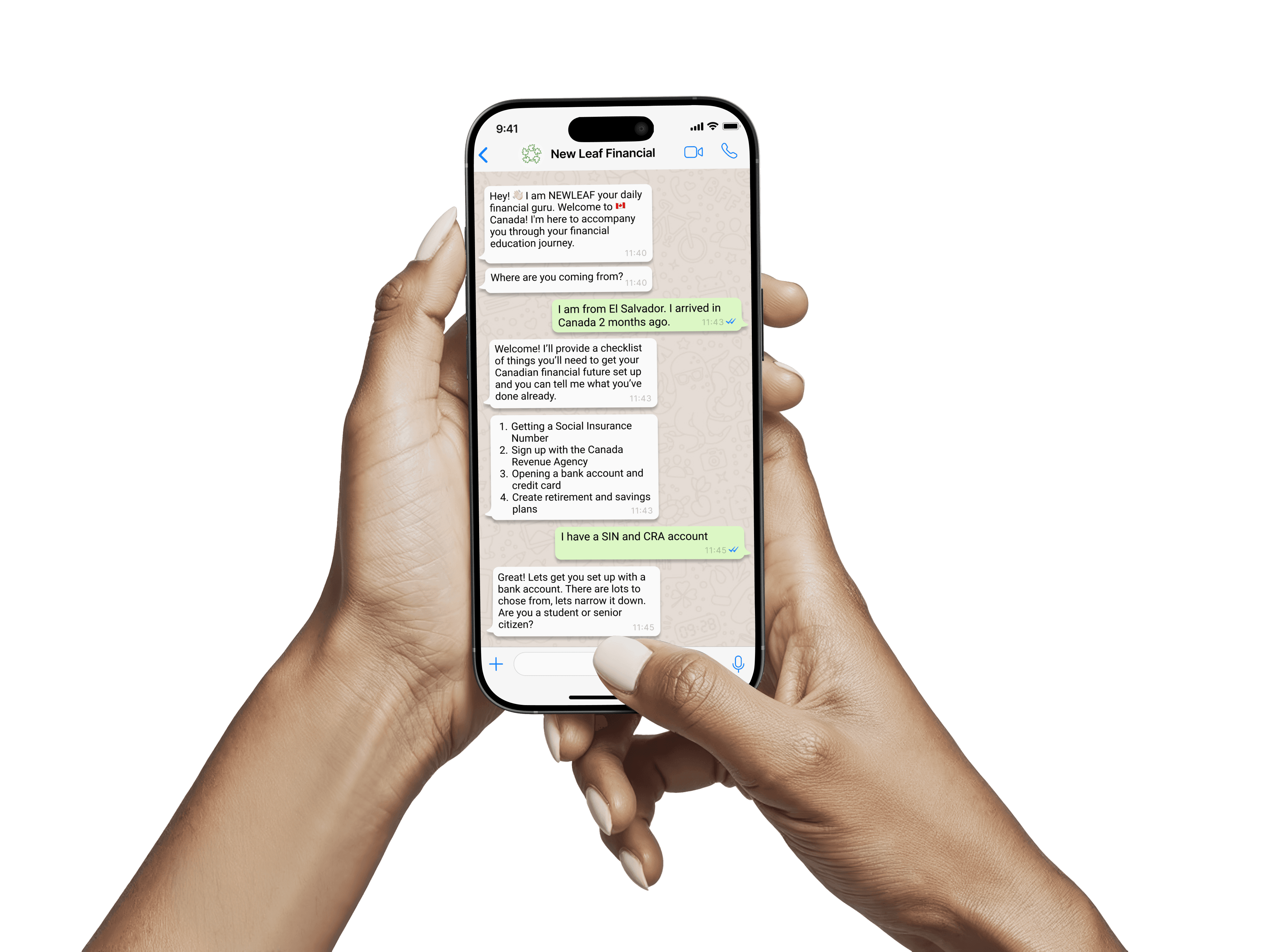
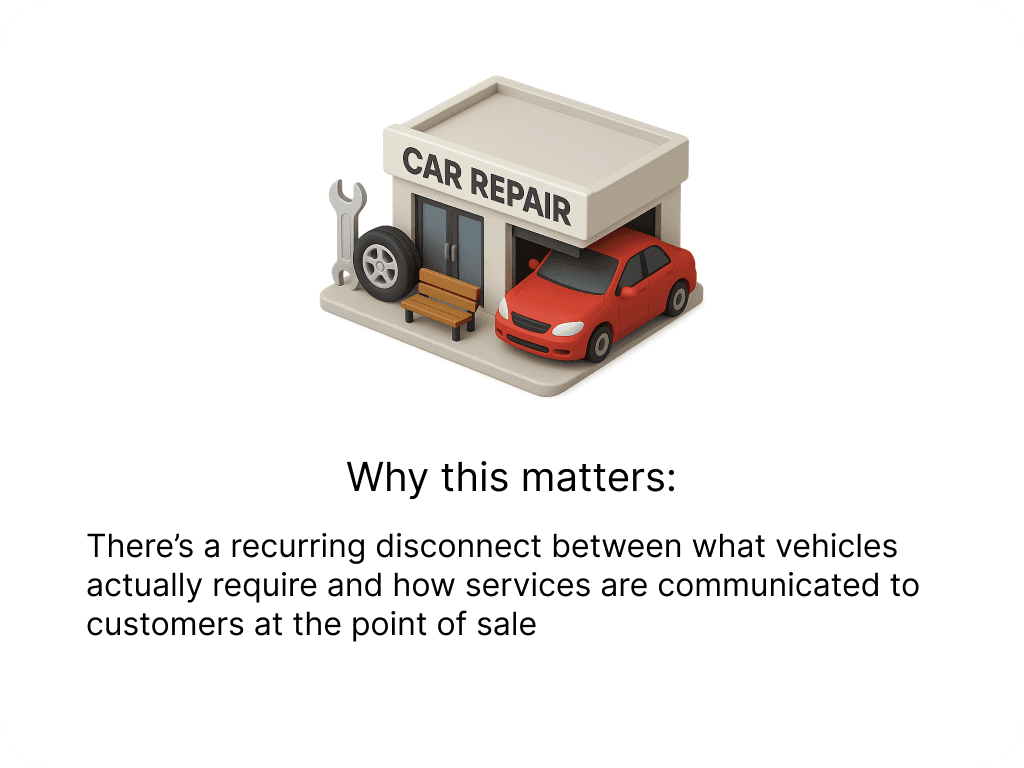
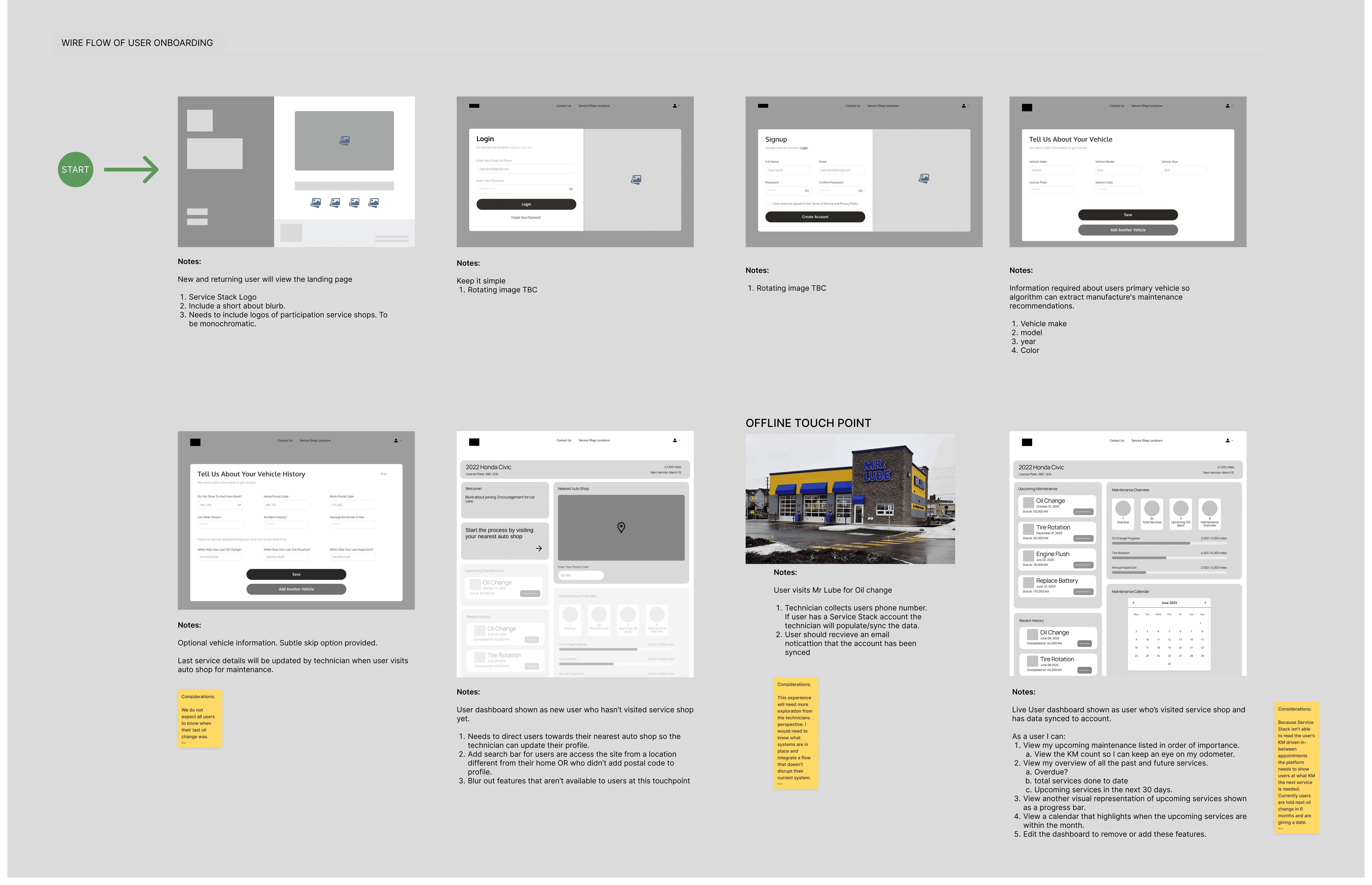
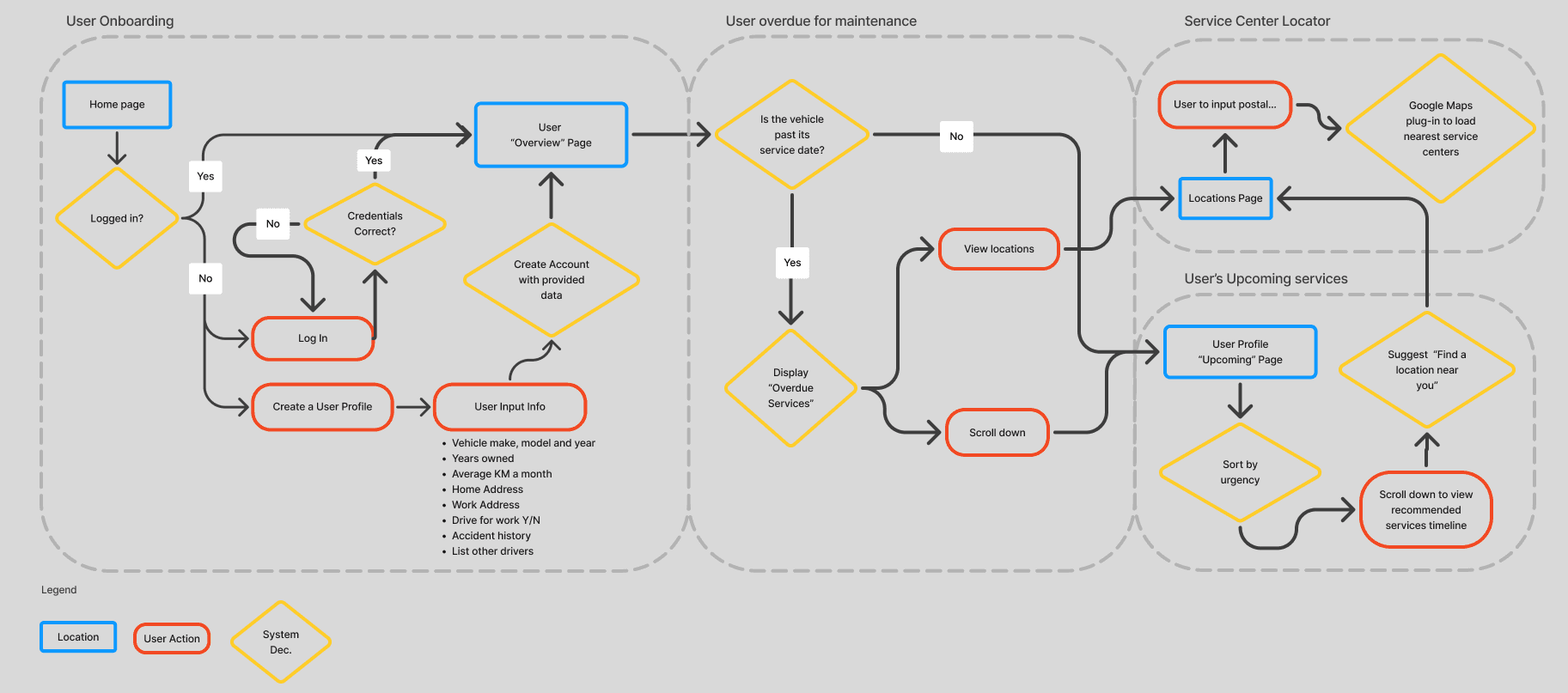
The biggest tension point is at and after service, where unclear information and unexpected recommendations can create doubt. The opportunity is to connect the digital experience with the in-person visit, giving drivers better context before they arrive and more transparency during service.
Proposed Solution
Service Stack is a clean, minimal dashboard that helps car owners stay on top of vehicle maintenance. Track service history, set reminders for upcoming work, and organize receipts all in one place. In partnership with local service shops, Service Stack syncs records for transparency on both sides.
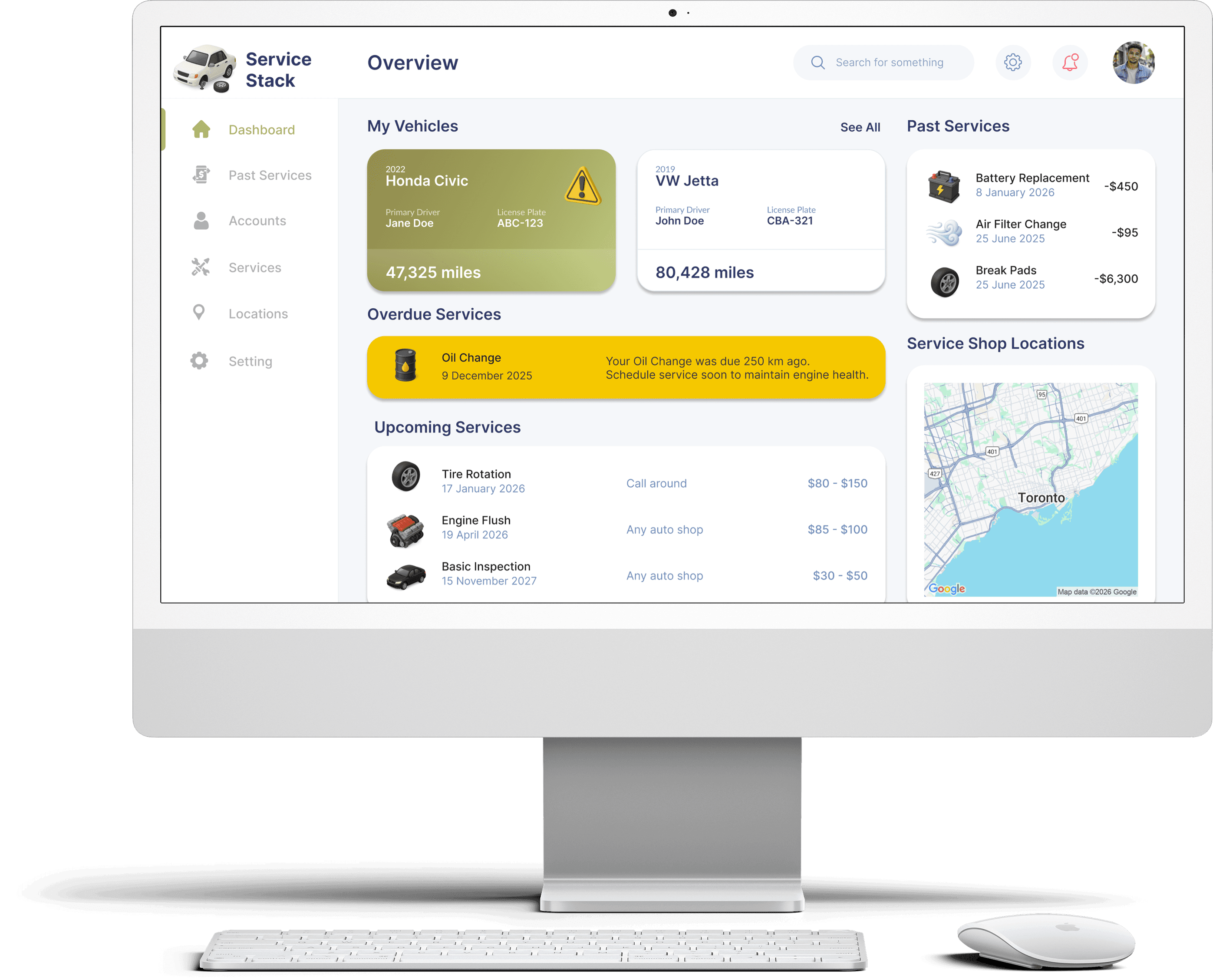
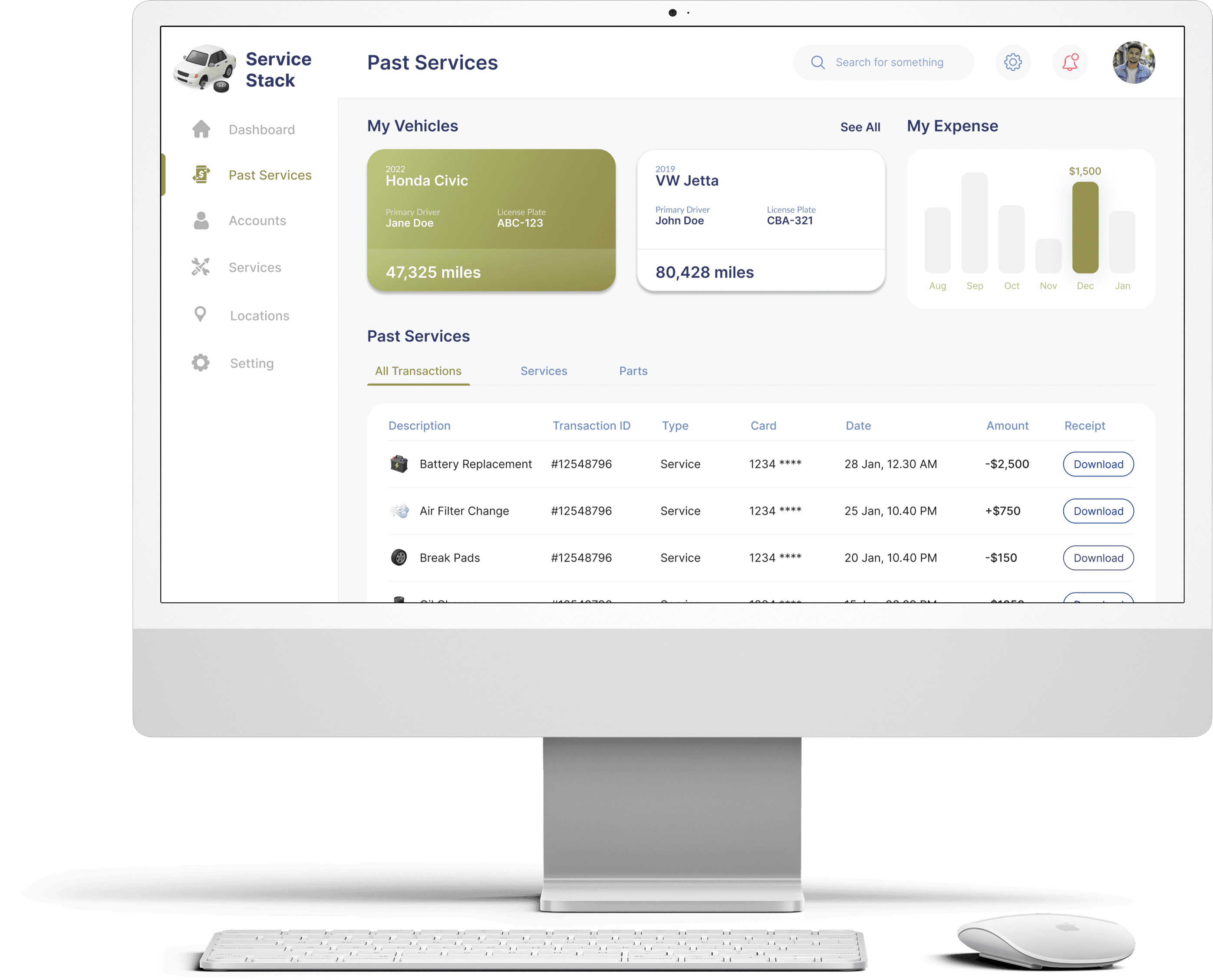
Organized & Standardized Invoice Tracking
During interviews, many people emphasized the need for invoice tracking, since they visit various auto shops. To solve this, Service Stack allows partnered shops to upload receipts after each visit, giving users a complete centralized service history.
Reflection
This project reinforced that distrust in service environments is rarely about cost alone. It is about clarity, timing, and perceived intent. By reframing vehicle maintenance as an ongoing relationship rather than a single transaction, Service Stack demonstrates how small shifts in information design and service continuity can unlock trust at scale.
The principles explored here such as transparency, shared context, and longitudinal visibility extend beyond automotive services and are applicable to other high-stakes domains such as healthcare, finance, and home services.
year
2025
timeframe
3 Months
tools
Figma, Miro, Lovable Dev
category
Service Design
01
02
03